Standards
What a state standardises when it standardises a keyboard
A layout decision fixes what is easy to type for a generation.

The weight of a key assignment
A keyboard layout is not a preference. Once it appears in a state tender, it becomes the default for every machine procured under that contract — every school lab, every district office, every citizen-service kiosk. The characters placed on the primary layer, those requiring no modifier, are the ones a typist reaches for without thinking. Everything else is, in practice, harder.
India's scripts complicated this from the start. A Devanagari syllable is not a single keystroke: a consonant, a vowel matra, and possibly a halant (the virama, the suppressor of the inherent vowel) all arrive in sequence, and the shaping engine assembles the visible conjunct after the fact. A layout that buries the halant under Alt or Shift forces the typist to break rhythm every time a conjunct is needed — which, in Hindi prose, is constantly.
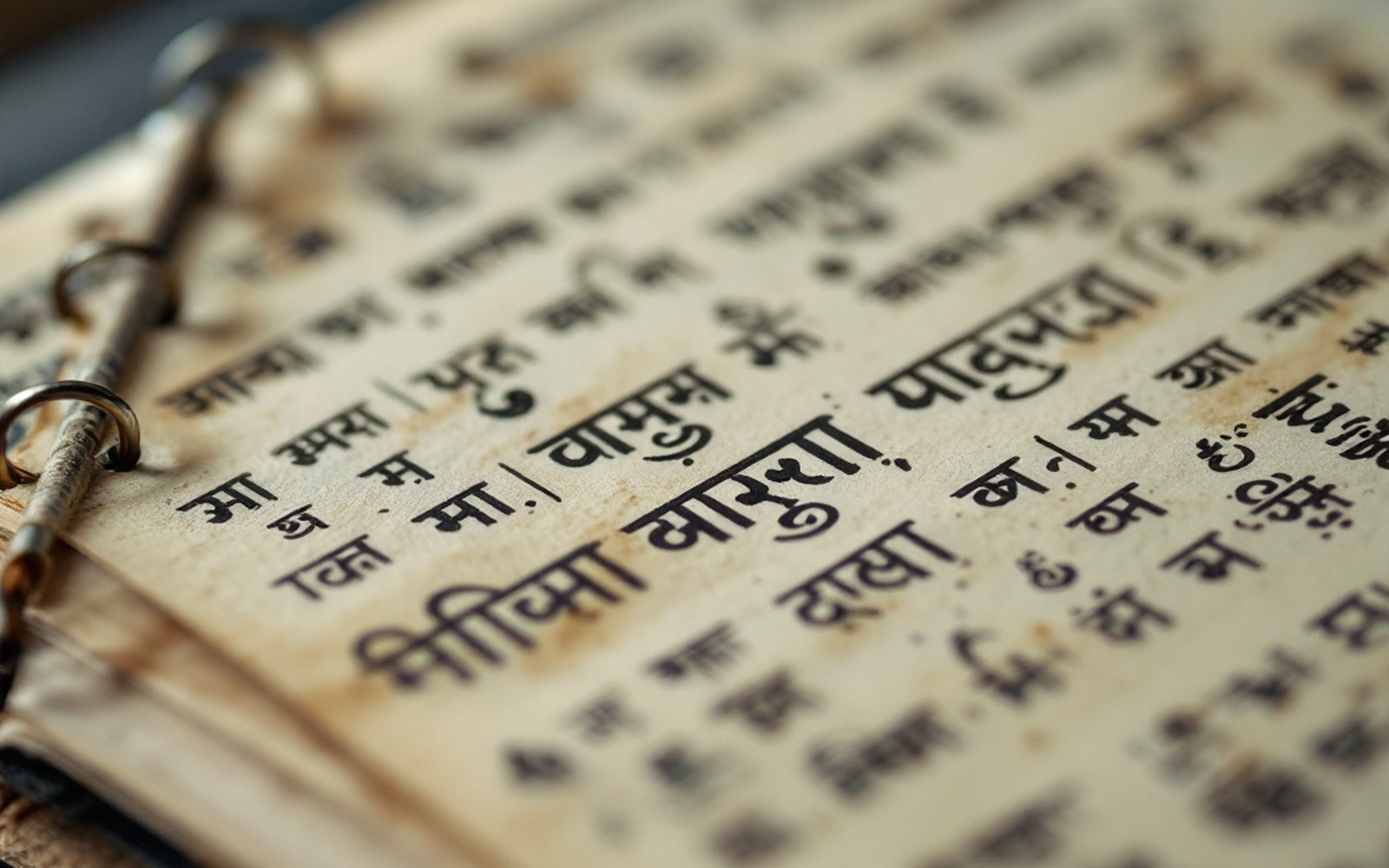
The two dominant layout families that emerged were InScript and Phonetic. InScript, standardised by the Bureau of Indian Standards as IS 1088, uses a script-logical arrangement: vowels on the left hand, consonants on the right, matras on the upper row. The same key positions carry the same phonetic role across all ten Brahmi-derived scripts that ISCII originally unified — so a touch-typist who knows InScript for Devanagari can transfer the skill to Malayalam or Tamil with modest retraining. Phonetic layouts instead mirror a QWERTY Roman mapping, which lowers the entry barrier for English-trained typists but sacrifices the cross-script consistency.
Kerala's IT policy documents from the early 2000s, supporting the adoption of GNU/Linux across schools, specified InScript as the required standard input method. Tamil Nadu's deployments under its own school Linux programme followed comparable directions. The practical consequence was that InScript drove the curriculum; teachers were trained on it; students learned it. A generation's typing habits were set not by market preference but by a line in a procurement schedule.
Chronology
- IS 1088BIS standard specifying the InScript keyboard layout for Indian scripts
- InScriptscript-logical layout placing vowels left, consonants right, consistent across Brahmi-derived scripts
- Halant / Viramathe suppressor of a consonant's inherent vowel; its key position determines how easily conjuncts are typed
- Kerala IT@Schoolstate project mandating Unicode-compliant InScript input across school deployments
- Tamil Nadu school Linux programmeparallel state deployment specifying comparable input standards
The Unicode code points assigned to each key matter equally. A layout that produces the correct Unicode scalar value — rather than a legacy ISCII byte or a font-encoded hack — integrates cleanly with every conformant application and passes through network protocols without corruption. When Kerala's IT@School project mandated Unicode-compliant input, it was simultaneously making a data-integrity decision that would outlast any particular software version.
Layout standardisation is therefore three decisions compressed into one document: which characters are primary, which encoding they emit, and which pedagogical path the state will fund. Reversing any of them is a curriculum revision, a retraining budget, and a procurement cycle — not a software update.
A layout that buries the halant under Alt or Shift forces the typist to break rhythm every time a conjunct is needed — which, in Hindi prose, is constantly.
What the layout decision locks in
- Primary layercharacters reachable without a modifier; defines everyday typing speed
- Encoding outputwhether a key emits a Unicode scalar value or a legacy byte
- Cross-script transferabilityInScript's design allows skill transfer across scripts; phonetic layouts do not
- Procurement cascadeone line in a tender schedule determines hardware configuration, teacher training, and curriculum for the contract period
Attributions
- Bureau of Indian Standards as IS 1088services.bis.gov.in
- Tamil Naduen.wikipedia.org